Mosquito micro-misting uses ultra-low volume (ULV) equipment producing fine 20-to-40-micron droplets that adhere to the undersides of broadleaf vegetation, dense shrubs, and groundcovers where adult mosquitoes rest…
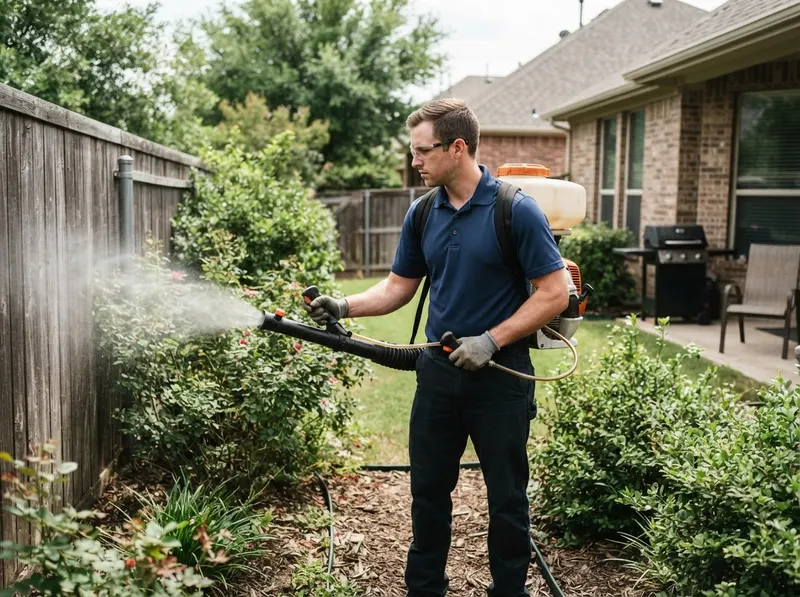
Mosquito micro-misting uses ultra-low volume (ULV) equipment producing fine 20-to-40-micron droplets that adhere to the undersides of broadleaf vegetation, dense shrubs, and groundcovers where adult mosquitoes rest during daylight hours. This delivery method limits drift and avoids broad-spectrum saturation, contrasting sharply with blanket thermal fogging that disperses active ingredients randomly across lawns. Concurrently, biological larvicide containing naturally occurring Bacillus thuringiensis israelensis (BTI) bacteria is placed into French drains, rain barrels, catch basins, and plant saucers. BTI targets mosquito and blackfly larvae exclusively within 24 hours of ingestion, leaving fish, frogs, birds, and mammalian pets entirely unharmed. Unlike automated overhead misting lines that trigger indiscriminately on fixed timers, targeted manual applications allow selective perimeter coverage that protects active honeybee zones, flowering vegetable gardens, and koi ponds.
Plano properties frequently present distinct environmental vectors that dictate treatment requirements. In established neighborhoods such as Willow Bend, Lakeside on Preston, and Kings Ridge, heavy tree canopies, shaded turf boundaries, and complex landscape irrigation systems generate microclimates of high humidity favored by Culex species. Properties bordering riparian greenbelts like White Rock Creek, Russell Creek Park, or the borders of Oak Point Park and Nature Preserve experience higher migration pressures from natural wetland reserves. In communities with older structural drainage such as Pitman Creek North and Briarwood, subterranean drainage basins and decorative stone retaining walls trap slow-draining rainwater, forming prime larval development habitats within 72 hours of typical North Texas thunderstorm events.
Selecting standalone micro-misting over an integrated larvicide regimen creates a defined trade-off: adulticide misting alone reduces active biting populations within 2 hours but leaves hidden subterranean larvae undisturbed, leading to reinvasion within 7 to 10 days as new pupae emerge. Pairing targeted foliage misting with quarterly or monthly larvicide interruptions breaks the reproduction chain across both terrestrial and aquatic life stages. Standard treatments remain weather-dependent; rainfall exceeding 0.5 inches within 3 hours of application requires surface drying before full botanical adhesion is achieved, while sustained ambient winds over 10 miles per hour trigger automatic rescheduling to eliminate pesticide drift into untargeted areas.
Every job gets a firm, written price after a free on-site visit.
Tell us about your mosquito micro-misting and larvicide application job in Plano and we'll send a clear, written quote, usually the same day.
 Blue Heron Pest Control